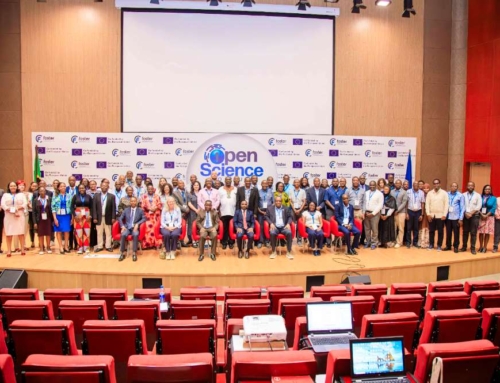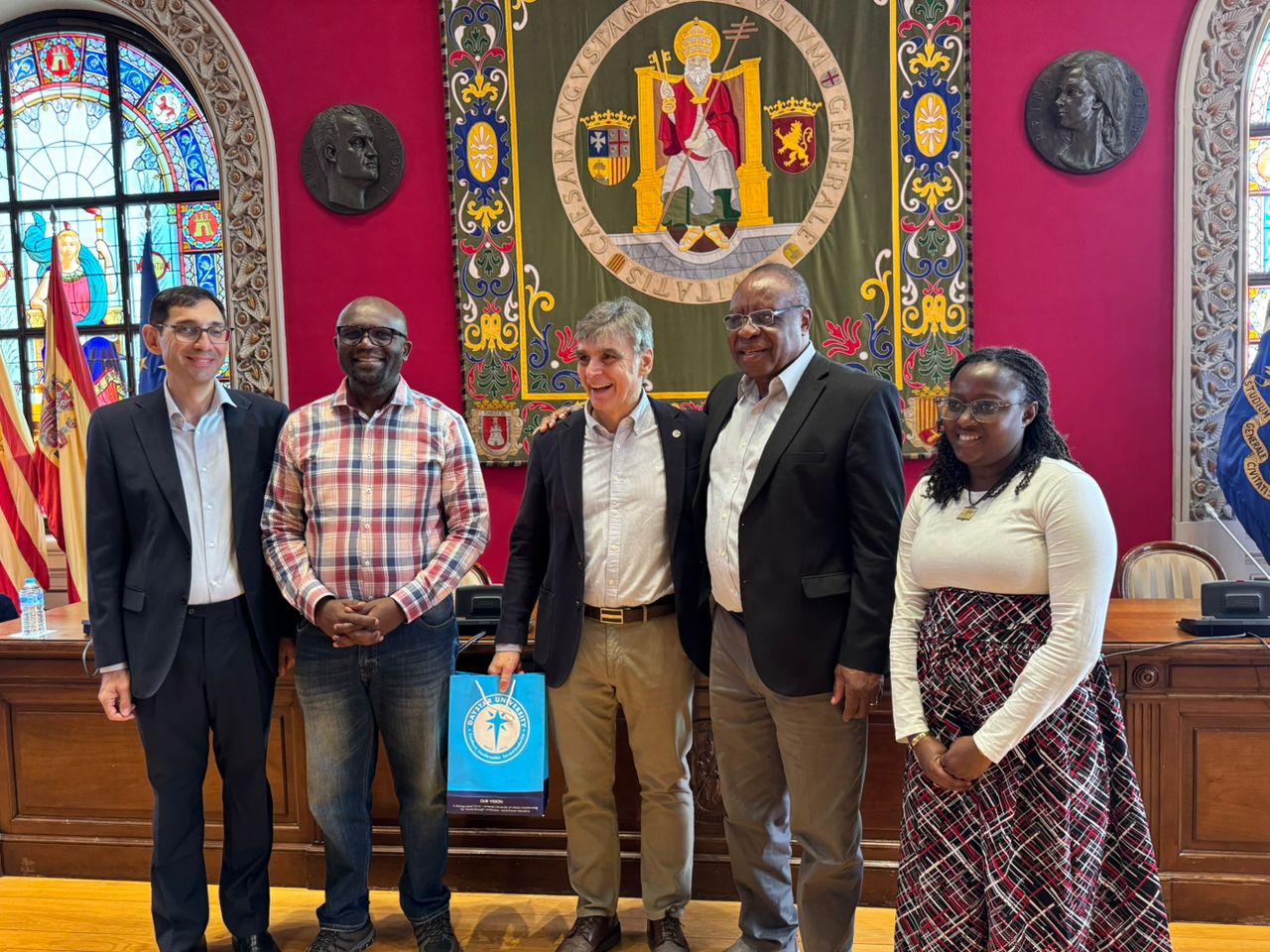
[From Left to Right] Prof. Rafael Gonzalez University of Zaragoza, Prof. David Kalaba ESAMI, Sergio Salinas Vice Rector Internationalization UNIZAR, Vice Chancellor Daystar University Prof. Laban Ayiro and EU FOSTER Project Coordinator Ms. Grace Mbogo during the mobility in Zaragoza- Spain
By Dr. Lydia Radoli: FOSTER Project Communication and Visibility Officer
[Zaragoza, Spain]Universities from Kenya and Tanzania participating in the EU-funded FOSTER project gained critical, practice-oriented insights into Open Science during a capacity-building mobility held in Zaragoza- Spain in October 2025.
The programme, anchored around the FOSTER Capacity Building Workshop on 20 October 2025, offered delegates from Kenya and Tanzania an immersive experience in European research systems, combining policy, infrastructure, citizen science, and ethical frameworks into a coherent model for transforming higher education.
The mobility brought together representatives from Daystar University, Garissa University, St. Paul’s University, the University of Dar es Salaam, and ESAMI, interacting with European partners led by the University of Zaragoza and Fundación Ibercivis.
Central to the experience was an exposure to Spain’s national Open Science framework, where presenters from the University of Zaragoza demonstrated how Open Science is embedded through legislation, requiring publicly funded research outputs to be openly accessible and aligned with FAIR data principles.
The team was officially welcomed by Prof. Rosa Bolea, Rector of the University of Zaragoza.
Expanding this policy perspective, Fermín Serrano Sanz Ibercivis, Research Infrastructure for Excellence in Citizen Science (RIECS), Concept Coordinator from Fundación Ibercivis highlighted that citizen science in Europe has evolved into a fully established research approach, supported by large-scale participation and growing scientific output. RIECS-Concept is a pioneering scientific project laying the foundation for a future pan-European Research Infrastructure dedicated to Citizen Science.
Fermín emphasized that citizen science integrates participation, transparency, and knowledge co-creation, positioning citizens as contributors to research rather than passive beneficiaries. This framing resonated strongly with the East African institutions seeking to bridge the gap between research and community needs.
Institutional infrastructure emerged as another cornerstone of the European Open Science system. At the University of Zaragoza Library, Ana Morato presented platforms such as the Zaguán institutional repository and the Papiro open journal system, which support open access publishing and research data management. These systems, developed within a structured national framework, enhance research visibility, ensure compliance with regulatory requirements, and extend access to knowledge beyond academia.
Beyond policy and infrastructure, much of the Zaragoza mobility focused on the practical application of Open Science through citizen science initiatives. In her presentation on the AGORA project, Judith Bielsa, Lucía Moreno, Olga Varela of Fundación Ibercivis demonstrated how communities in Europe are actively involved in co-designing climate adaptation strategies. She explained that participatory processes including focus groups, workshops, and co-creation platforms ensure that scientific solutions reflect lived experiences and local priorities.
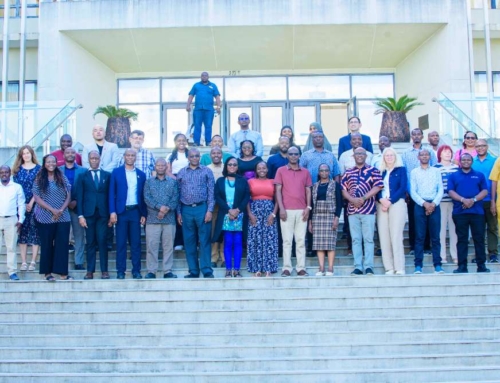
A section of FOSTER Project team during the mobility visit at University of Zaragoza, Spain
Similarly, applied research was showcased through the Flood2Now initiative, where scientists and citizens collaboratively generate real-time environmental data to improve flood prediction models. The project integrates Artificial Intelligence (AI) with citizen-generated observations, illustrating how community participation can enhance both scientific accuracy and public engagement in environmental management. Enrique Navarro Daniel Bruno and Miguel Sevilla, in their demonstration on environmental monitoring innovations showcased how citizen science can be used to track air quality using domestic plants as biological sensors. Their findings showed that wide participation enables the detection of pollution patterns at both macro and micro levels, although they stressed the need for sustained participation, recognition, and long-term project support.
Another example from Spain’s Aragón region illustrated the integration of science with cultural knowledge. Through a citizen science mapping project, communities collaborated in documenting natural water sources using mobile applications and field surveys. The project not only generated environmental data but also preserved ethnographic knowledge, demonstrating the broader societal value of participatory research.
Ethical considerations were a recurring theme throughout the mobility. Maite Pelacho of Fundación Ibercivis emphasized that citizen science must operate within strong ethical frameworks that ensure transparency, inclusion, and recognition of participants. She noted that participants should be treated as co-researchers, with proper acknowledgment, informed consent, and equitable access to knowledge. These principles, participants observed, are critical in addressing issues of trust and equity particularly in contexts where research has historically been extractive.
In a concept of co-development, Sergio Valdivielso Pardos and Ángel Pueyo Campos from the University of Zaragoza, further reinforced the collaborative ethos underpinning the FOSTER mobility. They described co-development as a reciprocal model of partnership in which both European and African institutions benefit through shared knowledge, innovation, and capacity building.
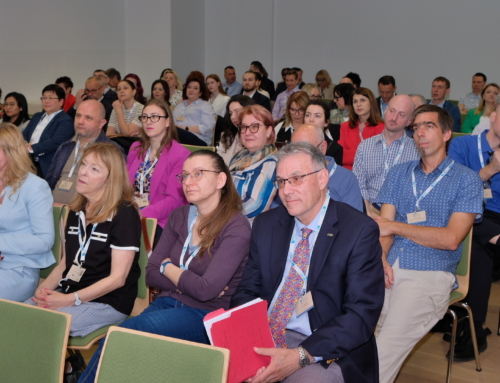
Interactive sessions, including a structured World Café facilitated by Fundación Ibercivis, provided a platform for African and European participants to reflect on institutional barriers and opportunities. Discussions revealed common challenges such as limited policy frameworks, insufficient funding, low awareness, and weak institutional linkages with communities.
However, participants also identified strong opportunities in capacity building, infrastructure development, and multi-stakeholder collaboration as pathways for embedding Open Science.
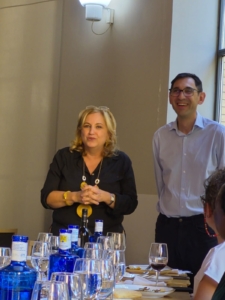
Prof. Prof. Rosa Bolea, Rector of the University of Zaragoza welcoming the FOSTER project team from East Africa to the University of Zaragoza, Spain
By the conclusion of the Zaragoza mobility, several clear recommendations had emerged. These included the need for African universities to develop national and institutional Open Science policies, invest in digital infrastructure and repositories, integrate Open Science into curricula, and strengthen citizen engagement through participatory research models. Participants also emphasized the importance of sustained Africa, EU collaborations to support knowledge exchange and capacity development over the long term.
Overall, the Zaragoza study visit provided a comprehensive demonstration of how Open Science operates within an integrated ecosystem combining policy, technology, community engagement, and ethics. For the East African delegation, the experience offered both inspiration and practical frameworks for advancing the digital transformation of science, while underscoring the importance of adapting European models to local contexts to ensure relevance and sustainability.